
Are We Ready?
Updated: Sep 25
By Twan Leenders, Director of Conservation
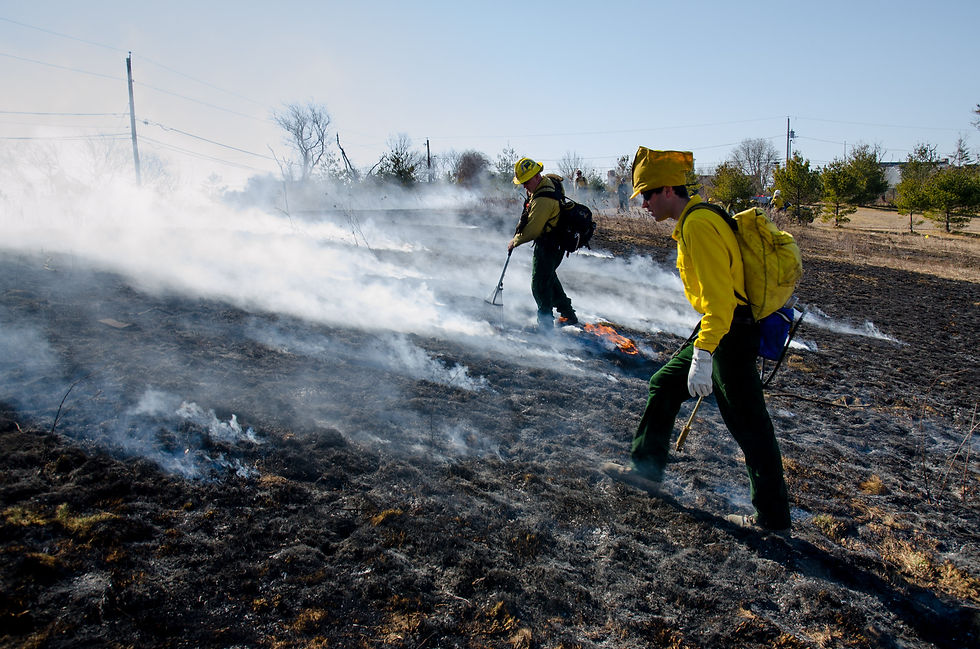
It’s been a beautiful summer in Chautauqua County so far, sunny and warm, with the usual overload of events to attend and experiences to enjoy. But a few weeks ago, we got a reminder that things are not like this everywhere. Smoke from hundreds of wildfires in the Midwest and Canada caused our air quality to deteriorate rapidly, reaching unhealthy levels. While we are fortunate not to be directly experiencing the devastating impacts of communities and ecosystems going up in flames, we still suffered the ill effects of the resulting smoke, and continue to do so at times.
If you have followed the news even a little lately, you know that Europe is experiencing unprecedented heat and drought. Forest fires, evacuations, and river levels so low that World War II-era battleships are emerging from the bottom of the Danube are making headlines. On-water transportation of goods has become difficult or impossible in some places. On land, farm fields are drying, reservoirs are shrinking, and crops are failing, negatively affecting food production and availability and potentially contributing to higher grocery prices far beyond the regions where the food is actually grown.

Similar scenarios are playing out across the western half of our country, which has been chronically dry, with groundwater levels dwindling for years. Water levels in South America’s Amazon River are low enough to disrupt transportation and fisheries, and parts of the usually dripping-wet Amazon rainforest have dried enough to burn. Southern Africa has also been a major global drought hotspot.
Droughts happen periodically, but it is worrisome to see several global regions that are usually considered relatively water-secure and agriculturally productive, including Western Europe, the Amazon Basin, and boreal Canada, experiencing severe drought conditions. Drought frequency and severity have increased significantly over the past 20 years, even as extreme precipitation events are also becoming more frequent.
It is important to distinguish between meteorological drought (not receiving enough rain) and ecological or agricultural drought. A warming atmosphere increases evaporation, meaning an area can become severely dry even without an unprecedented decline in rainfall. That’s exactly what is happening in parts of Europe this summer: extreme heat is effectively pulling moisture out of soils and vegetation faster than rainfall can replace it.
Fortunately for us, the Great Lakes region can remain relatively wet while other major agricultural regions are simultaneously experiencing extreme drought. Ironically, climate change can make that spatial contrast even more pronounced rather than simply making everywhere uniformly drier. And even if we are relatively sheltered from the direct impacts of drought elsewhere, we will still experience its effects in many ways, ranging from unhealthy air quality to increased food prices at the grocery store.
It is important to recognize that we live in a relatively water-secure area, and that will increasingly be a draw for people and businesses located in drought-affected regions. Are we protecting our precious water resources in ways that will allow us to accommodate this anticipated growth in demand? Are our communities resilient enough to adapt to local and regional impacts of extreme weather and other disruptive events associated with a changing climate?
Everwild Land Trust is working hard to protect the lands and ecological systems that provide us with clean drinking water, help filter and improve water quality, and buffer temperature swings and evaporative water loss throughout our region.
Chautauqua County is currently soliciting input on a climate resilience plan being prepared to help us better adapt to rapidly changing environmental conditions and respond quickly and efficiently in the aftermath of potential disasters. We should all get involved in these long-term planning efforts and share our thoughts, concerns, and ideas for the future. Through open discussion and increased preparedness, we can hopefully avoid many of the dire situations we see impacting communities around the world on the news each day.
Not only does this make logical sense, it also makes economic sense. Current research from the U.S. Chamber of Commerce shows that every dollar invested in resilience can save communities $13 in economic impacts, damages, cleanup costs, jobs, and lost wages. We have to adapt and become more climate-smart!
To learn more about the county’s resilience plan, or to share your thoughts, concerns, or ideas, please visit: https://tinyurl.com/4fyje8ct
To learn more about Everwild Land Trust’s efforts to protect the ecologically and hydrologically most valuable lands in our region, as well as our ecological restoration efforts, visit our website at https://www.everwildlandtrust.org/


Comments